
You’ve probably noticed that more homes and commercial buildings around the Tri-Cities are swapping out traditional shingles for metal roofing, and it’s not just about keeping up with trends.
Local property owners are paying closer attention to how their roof performs over time, especially with the kind of weather we see in the Pacific Northwest. Durability, energy savings, and long-term value are all starting to carry more weight in the decision-making process.
That’s why many local property owners are asking smarter questions: What’s the real metal roof cost? Is a metal roof worth it in the long run? And what actually goes into metal roofing installation?
Let’s break it all down in plain English, with just enough detail to help you make a well-educated decision about metal roofing without feeling like you need a construction degree.
What Is Metal Roofing, Exactly?

Despite how it sounds, a metal roof isn’t just one single product. It’s a category of roofing systems made from different metal roofing materials, profiles, and finishes, each with its own look, performance, and price point.
Here are the main types you’ll see:
Standing Seam Metal Roof
This is the premium option. A standing seam metal roof uses vertical metal panels with raised seams that lock together. That hidden fastening system keeps water out and gives the roof a clean, modern look.
If you’ve heard people talk about a seam metal roof, this is usually what they mean.
Corrugated Metal Roofs
Think of the classic wavy pattern. Corrugated metal roofs are more budget-friendly and commonly used on agricultural or commercial buildings, though they’re gaining traction in residential design, too.
Metal Shingles & Tiles
These mimic traditional shingles, slate, or even wood shake, but with the strength of metal. Great if you want the look of a classic roofing material with better durability.
Material Options
The type of metal you choose plays a big role in both performance and overall cost, so it’s worth understanding how each option stacks up.
- Steel: The most common choice. Strong, cost-effective, and widely available.
- Aluminum: Lightweight and corrosion-resistant, great for wet climates.
- Copper: Premium option with a distinctive look that ages beautifully over time.
- Zinc and other specialty metals also exist, though these are less common.
Each material brings its own balance of durability, appearance, and price, which is why the right choice often comes down to your climate, budget, and long-term goals for the roof.
Breaking Down Metal Roof Cost
Let’s talk numbers, because the biggest question is always about metal roof costs.
Average Cost Estimates
According to NerdWallet’s 2026 estimates, most metal roofing systems range from $5,500 to $15,500, depending on the materials, complexity, and labor. Most cost just under $10,500.
What Impacts the Total Cost?
The total cost of a metal roof isn’t just about the panels. Several factors come into play:
- Roof size and pitch (steeper roofs require more labor)
- Type of metal roofing materials (steel vs. aluminum vs. copper)
- Profile choice (standing seam vs. corrugated vs. shingles)
- Labor and installation complexity
- Underlayment and proper insulation
- Flashing, trim, and finishing details
Every one of these adds to the final cost, which is why getting a detailed estimate matters.
Metal Roofing vs. Asphalt Shingles: The Real Value Story
At first glance, asphalt shingles win on price. Most shingle roofs cost between $1.50 and $6.00 per square foot for materials, and most standard asphalt shingles fall on the lower end of that range, according to Angi’s 2026 data.
However, here’s where things shift.
Upfront vs. Long-Term Cost
A metal roof:
- Costs more upfront
- Lasts 40–70+ years
- Requires fewer repairs
- Rarely needs full replacement
Shingles:
- Cost less upfront
- Last 15–30 years
- Need replacement (often twice) over the same period
So when people ask if a metal roof is worth the investment, the answer usually comes down to how long you plan to stay and how much you value durability.
Why More Property Owners Are Choosing Metal

There are multiple reasons metal roofing is gaining ground, both here in the Kennewick area and throughout the United States. Here are some of the biggest benefits:
Longevity You Can Count On
A properly installed metal roof can last half a century or more. That’s a long run compared to traditional roofing material options.
Built for Tough Weather
In the Pacific Northwest, your roof deals with:
- Heavy rain
- Windstorms
- Occasional snow
A standing seam metal roof sheds water quickly and resists wind uplift far better than most shingles.
Energy Efficiency That Pays Back
Metal reflects solar heat, helping reduce cooling costs in warmer months. Pair that with proper insulation, and you’ll see better overall energy efficiency year-round.
Low Maintenance
No curling, cracking, or missing shingles. Metal roofing systems are known for being durable and low-maintenance.
Fire Resistance
Metal doesn’t ignite, which can be a major advantage in certain areas, especially in regions where fire risk is a concern. This added layer of protection can provide peace of mind and may even play a role in insurance considerations depending on your location.
Environmentally Friendly
Many metal roofs are made from recycled materials and are fully recyclable at the end of their life, making them a more sustainable roofing material compared to traditional shingles. Their long lifespan also means fewer replacements over time, which helps reduce overall waste.
How Metal Roofing Handles Pacific Northwest Weather
If you live in the Tri-Cities or surrounding areas, the weather is certainly a big factor to consider.
A metal roof excels in our climate because:
- It handles heavy rain without pooling
- Snow slides off easily instead of building up
- Wind resistance is significantly higher than standard shingles
- Moisture issues are reduced when properly installed
Ultimately, this is about protecting your property over time, as well as keeping water out, reducing the risk of damage, and giving you confidence that your roof can handle whatever the Pacific Northwest throws at it.
Design Options: It’s Not Just “Metal Gray” Anymore
Modern metal roofing has come a long way. Today, you can choose from:
- Dozens of colors
- Matte, gloss, or textured finishes
- Profiles that mimic traditional shingles or tiles
- Clean, modern standing seam lines
Whether your home is a farmhouse, modern, or traditional, there’s a metal roof that fits.
Metal Roofing Installation: What Actually Happens

Now let’s get into the nuts and bolts of metal roofing installation.
Step 1: Roof Inspection & Preparation
Your existing roof is evaluated. In some cases, the new metal roof can go over the old one. Other times, a full tear-off is needed.
Step 2: Underlayment Installation
A moisture barrier is installed to protect the structure beneath the metal panels.
Step 3: Panel Placement
Large metal panels or sections are measured and placed across the roof.
Step 4: Fastening System
With a standing seam metal roof, fasteners are hidden. This helps prevent leaks and improves durability.
Step 5: Flashing & Trim
Edges, valleys, and penetrations are sealed with flashing to keep water out.
Step 6: Final Inspection
Everything is checked to make sure the installation meets manufacturer and local standards.
How Long Does Metal Roof Installation Take?
Most residential metal roofing installation projects take 2 to 5 days, depending on size and complexity. Larger or more detailed roofs may take longer.
Why Professional Metal Roof Installation Is Important
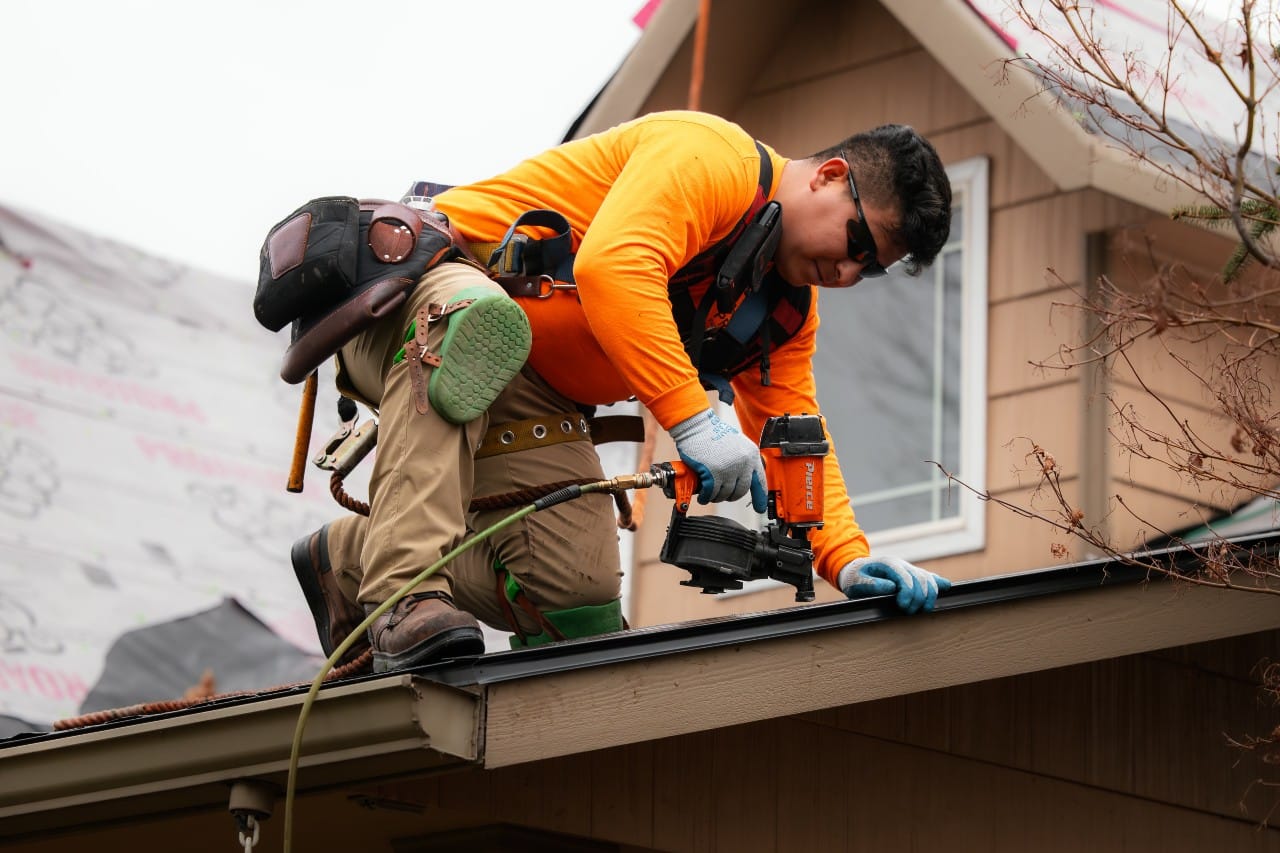
Metal roofing installation isn’t a DIY-friendly project. Improper installation can lead to:
- Leaks
- Noise issues
- Voided warranties
- Reduced lifespan
A professional team knows how to:
- Align panels correctly
- Seal seams properly
- Account for expansion and contraction
- Protect your investment
They also understand local building codes and manufacturer requirements, which helps avoid costly mistakes down the line. More importantly, experienced installers can spot potential issues early and address them before they turn into bigger problems.
Maintenance & Long-Term Care
One of the biggest advantages of a metal roof is what you don’t have to deal with over time. Unlike other roofing materials that need frequent repairs or replacement, metal is built to hold up with minimal attention, saving you both time and ongoing costs.
Good news: metal roofs don’t ask for much. Basic maintenance includes occasional inspections, clearing debris, and checking fasteners and flashing to make sure everything stays sealed and secure.
Over the years, that simplicity adds up. Compared to shingles, the long-term upkeep is minimal, which is part of what makes a metal roof such a practical, low-hassle investment.
Warranty Coverage
Most metal roofing systems come with both material warranties (often lasting 30 to 50 years) and workmanship warranties that vary by contractor. This is another reason proper installation matters, since the quality of the work can directly impact whether that coverage holds up over time.
Common Metal Roofing Myths (Let’s Clear These Up)
“Metal roofs are loud in the rain.”
This usually isn’t the case with proper insulation. In fact, they’re often no louder than shingles.
“They attract lightning.”
Metal doesn’t attract lightning. It simply conducts electricity if struck, like many building materials.
“They dent easily.”
High-quality steel and other materials are built to withstand impact.
Is a Metal Roof Right for You?

In most cases, a metal roof makes sense if you:
- Plan to stay in your home long-term
- Want fewer replacements over time
- Value durability and weather protection
- Are comfortable with a higher upfront cost for long-term savings
On the flip side, it may not be the best fit if:
- You’re planning to sell soon
- You’re strictly focused on the lowest upfront cost
The key is looking beyond just the upfront cost and thinking about how your roof will perform over the next 20, 30, or even 50 years. If long-term value, reliability, and peace of mind matter to you, a metal roof is often a smart move.
The Bottom Line: Is the Investment Worth It?
A metal roof isn’t usually the cheapest option, but it’s one of the most reliable.
When you factor in lifespan, maintenance, energy efficiency, and durability, the total cost often balances out over time. For many property owners, that makes a metal roof worth serious consideration.
Considering Metal Roofing for Your Home?
Get expert guidance and a detailed estimate!
Contact Palmer Roofing for a comprehensive consultation about metal roofing installation and learn exactly what your investment will look like in the Kennewick or Pendleton areas. Whether you’re still learning about this type of roof or just wondering about pricing, we’re here to answer all of your pressing questions. Schedule your free estimate today and explore whether metal roofing is the perfect solution for protecting and enhancing your property.