
If you’ve looked up metal roof cost online, you’ve probably found price ranges so wide they’re hard to use. One site says one thing, a calculator says another, and none of them have seen your roof.
There’s a reason for the spread. “Metal roof” covers everything from corrugated panels on a shop building to a standing seam system on a two-story home in Kennewick. Those are different products, installed different ways, and they’re priced accordingly.
So instead of another number that may not fit your house, this guide walks through what moves metal roof cost up or down, how metal compares to asphalt shingles over the life of your home, and why Eastern Washington and Oregon weather matters. It’s the same conversation we’d have with you at your kitchen table.
Why Metal Roof Cost Varies So Much From Home to Home

Two homes on the same street can get very different quotes for a metal roof, and both quotes can be fair. The final number comes down to a handful of things: the system you choose, the metal it’s made from, the size and pitch of your roof, what’s under your current roof, and how much detail work the project needs.
That’s why a single price rarely helps. A figure that fits a simple ranch-style roof in Pasco would be misleading for a steep, cut-up roof in Walla Walla. What we can do is explain where each choice lands compared to the others, so you walk into an estimate knowing what to ask.
Comparing the Three Main Metal Roofing Systems
Most residential metal roofs use one of three systems. Here’s how they compare:
| System | Upfront Cost | Lifespan | Maintenance |
| Standing Seam | Highest of the three | Longest | Low |
| Exposed Fastener (Corrugated) | Lowest of the three | Shorter than standing seam | Moderate, fasteners need periodic checks |
| Metal Shingles | Varies with style and finish | Long | Low |
Standing seam costs more than exposed-fastener panels because of how it’s built and installed. The panels run from ridge to eave and lock together at raised seams, with the fasteners hidden underneath. That takes specialized equipment and more careful installation, but it leaves far fewer places for water to get in.
Exposed-fastener panels, often called corrugated or ag panels, cost less up front because they go on faster and the material is simpler. The trade-off is that every screw goes through the face of the panel. Each one has a rubber washer that ages in the sun, so these roofs need periodic checks and the occasional fastener replacement to stay watertight.
Metal shingles are stamped to look like traditional shingles, slate or shake. They’re a good fit when you want the durability of metal without the look of panels, and their cost depends heavily on the style and finish you pick.
What Pushes Metal Roof Cost Up or Down

Beyond the system itself, these are the factors that move a quote the most.
Metal Type
Steel is the most common choice for homes. It’s strong, widely available and the most budget-friendly of the metals. Aluminum costs more but resists corrosion well. Copper sits at the top of the range and is usually chosen for its look, which changes as it ages. For most homes, steel does the job well.
Roof Size and Pitch
Size is the biggest single factor, since material and labor both grow with it. Pitch matters too. A steep roof takes more time, more safety equipment and more care to install than a low-slope one, so a steep gable on a two-story home will cost more to cover than a gentle slope on a single-story ranch.
Tear-Off or Overlay
Sometimes a metal roof can go right over an existing shingle roof, which saves the cost of tear-off and disposal. Other times the old roof has too many layers, soft decking or damage that has to be fixed first. The only way to know which applies is a proper inspection, and we’ll tell you plainly which one your home needs.
Underlayment and Flashing
These are the parts you don’t see, and they’re where shortcuts show up later as leaks. Underlayment is the moisture barrier between the metal and your roof deck. Flashing seals the transitions around chimneys, vents, skylights and valleys. A roof with lots of penetrations and valleys needs more of both, which adds to the cost, and it’s money well spent.
Regional Labor
Labor in Eastern Washington and Oregon is priced differently than in Seattle or Portland, and contractor availability shifts with the season. That’s one reason national calculators miss the mark here. A local estimate reflects local conditions.
One more thing worth saying: not every roof that’s showing its age needs replacing right now. If your current roof has good years left and a repair will protect your home in the meantime, we’ll tell you so.
Metal vs. Asphalt Shingles Over the Long Run
Asphalt shingles cost less to install, which is a big reason they’re on so many homes. Metal earns its keep over time.
According to the Metal Roofing Alliance, a metal roof lasts 40 to 70-plus years. The National Association of Home Builders’ Study of Life Expectancy of Home Components puts asphalt shingle roofs at about 20 years. Here’s what that difference looks like over 50 years:
| Metal Roof | Asphalt Shingles | |
| Upfront cost | Higher | Lower |
| Expected lifespan | 40 to 70+ years | About 20 years |
| Full replacements over 50 years | None to one | About two |
| Maintenance | Low | Moderate |
Every asphalt replacement brings another round of tear-off, disposal and disruption. A well-installed metal roof can skip most or all of that.
Shingles are still the right call for some homeowners. If you’re planning to sell in the next few years, or the upfront cost matters more to you than the long-term picture, asphalt is a practical choice, and we install it too.
How Metal Holds Up in Eastern Washington and Oregon Weather
Our weather isn’t the coast’s weather, and it asks different things of a roof.
Tri-Cities and Walla Walla summers bring long stretches of intense sun and heat. That UV exposure dries out and breaks down asphalt shingles over time. Metal doesn’t break down the same way, and many metal finishes reflect a good share of the sun’s heat instead of soaking it up, which helps keep attics cooler.
Around Pendleton, wind is the regular test. Standing seam panels lock together over concealed fasteners, which gives wind less to grab onto than exposed screws or the edges of shingles.
At higher elevations, including La Grande and the Blue Mountains, snow load is the concern. Snow slides off metal more readily than off asphalt, so less weight builds up on the roof during a heavy winter.
We’ve been roofing across this region since 1969, and that local experience shapes every recommendation we make.
What to Expect During a Metal Roof Installation

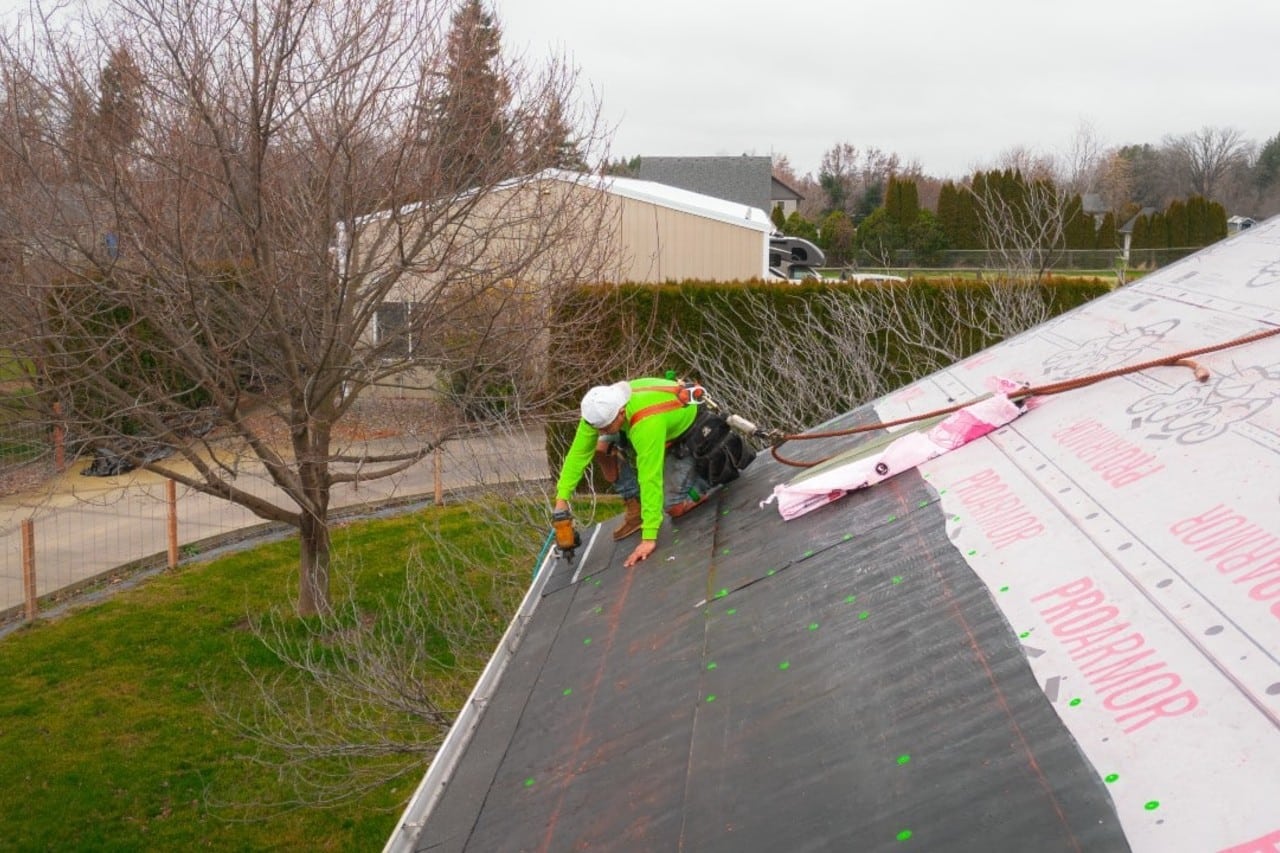
Installation follows a clear sequence. The crew inspects the existing roof first, then either tears it off or prepares it for an overlay. Underlayment goes down next, and the panels are measured, cut and set in place. On standing seam, each panel locks into the next over hidden fasteners. Flashing goes in around every penetration and transition, and a final inspection confirms everything is sealed.
It usually moves faster than people expect. In This Old House’s 2026 roofing survey, nearly 73% of homeowners who chose metal for their most recent roof replacement said installation took seven days or less. Larger or more complex roofs can take longer.
Professional installation also protects your warranty. Manufacturer and workmanship warranties on metal systems depend on the roof being installed correctly, which is one more reason this isn’t a DIY project.
Why Homeowners Across Eastern WA and OR Call Palmer
Palmer Roofing has been roofing homes and businesses since 1969. We’re local, with offices in Kennewick and Pendleton serving the Tri-Cities, Yakima, Walla Walla, Pendleton, La Grande and the communities in between.
We’re a GAF GoldElite Commercial Contractor, we hold an A+ rating with the Better Business Bureau, and our neighbors named us a Nextdoor Neighborhood Favorite three years running, from 2021 through 2023. Those came from doing the work right, one roof at a time.
On a metal roofing estimate, that means you get a straight answer. If metal is the right fit for your home and your plans, we’ll walk you through the options. If a repair or a shingle roof makes more sense for now, we’ll say that too.
Get a Free Estimate on Your Metal Roof Cost
The only way to know your metal roof cost is to have someone look at your roof. We’ll measure it, check what’s underneath, talk through the systems that fit your home and give you a clear estimate. No pressure and no obligation.
Call or stop by either office for a free, no-obligation estimate:
- Kennewick office: (509) 586-3741
- Pendleton office: (541) 276-6529
You can also request an estimate online. Trusted since 1969, and here when you’re ready.